
- About the Author
- The Efficient Market Hypothesis
- The Random Walk Theory
- Index Funds vs. Active Management
- The Power of Compounding
- Diversification Is Key
- Don’t Try to Time the Market
- Inflation and Its Impact
- Behavioral Finance: How Emotions Affect Investing
- Historical Market Bubbles and Crashes
- The Importance of Staying the Course
About the Author
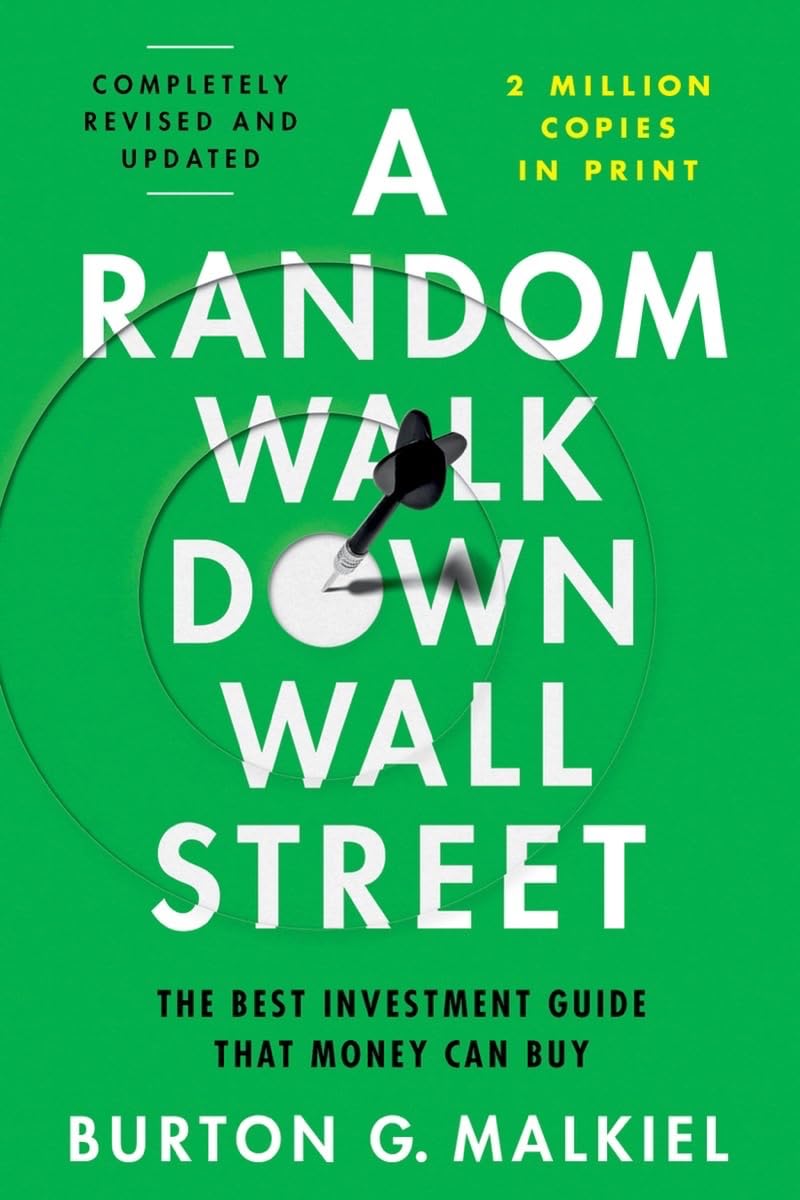
Burton G. Malkiel is a professor of economics and an expert in the world of investing. In A Random Walk Down Wall Street, Malkiel argues that stock prices are unpredictable, much like a “random walk,” meaning it’s incredibly difficult to consistently pick winning stocks. His book is focused on teaching readers how to build a solid investment strategy that doesn’t rely on trying to beat the market.
The Efficient Market Hypothesis
Malkiel introduces the Efficient Market Hypothesis (EMH), which says that stock prices reflect all available information, making it nearly impossible to consistently outperform the market. According to this theory, trying to pick stocks that will “beat the market” is largely based on luck, not skill. Instead, Malkiel suggests a better strategy: invest in a broad range of stocks, typically through low-cost index funds, to capture the overall growth of the market.
The Random Walk Theory
The book’s title comes from the idea that stock prices move in a random and unpredictable way. According to Malkiel, while there may be patterns in the short term, over time these patterns break down, making it impossible to predict future stock movements based on past performance. The randomness of the market means that even professional stock pickers and analysts struggle to consistently make accurate predictions.
Index Funds vs. Active Management
Malkiel strongly advocates for investing in low-cost index funds rather than using actively managed mutual funds. Actively managed funds try to outperform the market by picking individual stocks, but Malkiel argues that most of these funds fail to beat the market over time. Index funds, on the other hand, track the entire market and often outperform actively managed funds, especially after accounting for fees and commissions.
The Power of Compounding
Like many financial experts, Malkiel emphasizes the power of compounding. Compounding is when your investment earns returns, and then those returns start earning returns of their own. Over time, this can lead to exponential growth. The sooner you start investing, the more time compounding has to work its magic, turning small investments into large sums.
Diversification Is Key
A core principle of Malkiel’s investment philosophy is diversification. Diversification means spreading your investments across a wide range of assets, like different stocks, bonds, and real estate. This helps reduce risk because if one investment performs poorly, others may still perform well, balancing things out. Index funds, which include a large number of different stocks, are an easy way to achieve diversification.
Don’t Try to Time the Market
Malkiel warns against trying to time the market — that is, trying to predict when stock prices will go up or down so you can buy low and sell high. He explains that even experts often get market timing wrong, and missing just a few of the best-performing days in the market can drastically reduce your long-term returns. Instead of trying to time the market, Malkiel advises staying invested for the long term.
Inflation and Its Impact
The book also touches on inflation, which is the rising cost of goods and services over time. Malkiel explains that inflation can eat away at the purchasing power of your money, making it crucial to invest in assets that outpace inflation. Historically, stocks have been one of the best investments for beating inflation, as they tend to grow faster than the rate of price increases over the long term.
Behavioral Finance: How Emotions Affect Investing
Malkiel dives into the psychology behind investing, explaining how human emotions often lead to poor financial decisions. Investors may panic and sell when the market drops, or get greedy and buy when prices are soaring, only to suffer losses later. Malkiel stresses the importance of staying calm and sticking to a disciplined, long-term investment strategy rather than reacting emotionally to short-term market fluctuations.
Historical Market Bubbles and Crashes
Malkiel discusses famous market bubbles, like the dot-com bubble of the late 1990s, and crashes, such as the 2008 financial crisis. He explains that bubbles happen when investors get overly excited about certain assets, driving prices far beyond their true value. Eventually, these bubbles burst, causing significant losses. The lesson? Stay cautious during times of market hype and avoid chasing the latest investment fad.
The Importance of Staying the Course
Malkiel’s main advice is to stick to a long-term, diversified investment plan and ignore short-term market noise. By staying the course and keeping your investments in place, you give your money the best chance to grow over time. Trying to chase the latest trend or panicking during a downturn usually leads to worse results.
A Random Walk Down Wall Street teaches readers that it’s nearly impossible to consistently predict stock movements or beat the market. Instead, Malkiel advocates for a simple, low-cost, diversified investment strategy, primarily through index funds, that takes advantage of the market’s overall growth. With a focus on long-term investing, avoiding emotional decisions, and understanding the randomness of the market, Malkiel’s advice is designed to help investors build wealth with less stress and more success.
Leave a Reply